


Cross-Linking / Keratoconus
Corneal Cross-Linking (CXL)
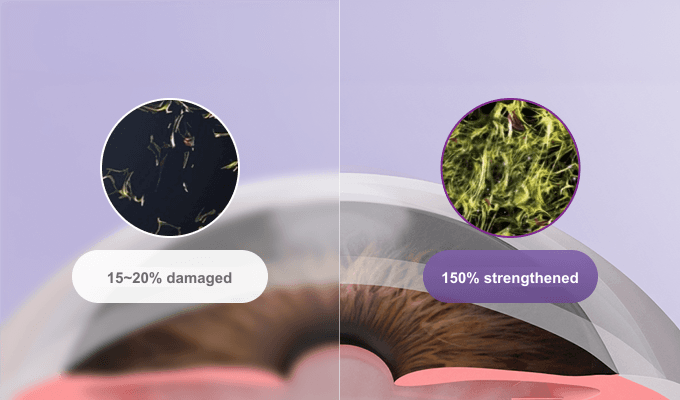
Strengthens the cornea's biomechanical integrity by reinforcing collagen fibre bonds in the stroma
After LASIK / LASEK
Reinforces the corneal tissue that becomes
relatively weaker after refractive surgery
Structurally fragile cornea
For thin corneas or those at risk of distortion
from chronic eye-rubbing or other strain
How CXL works
 STEP 1
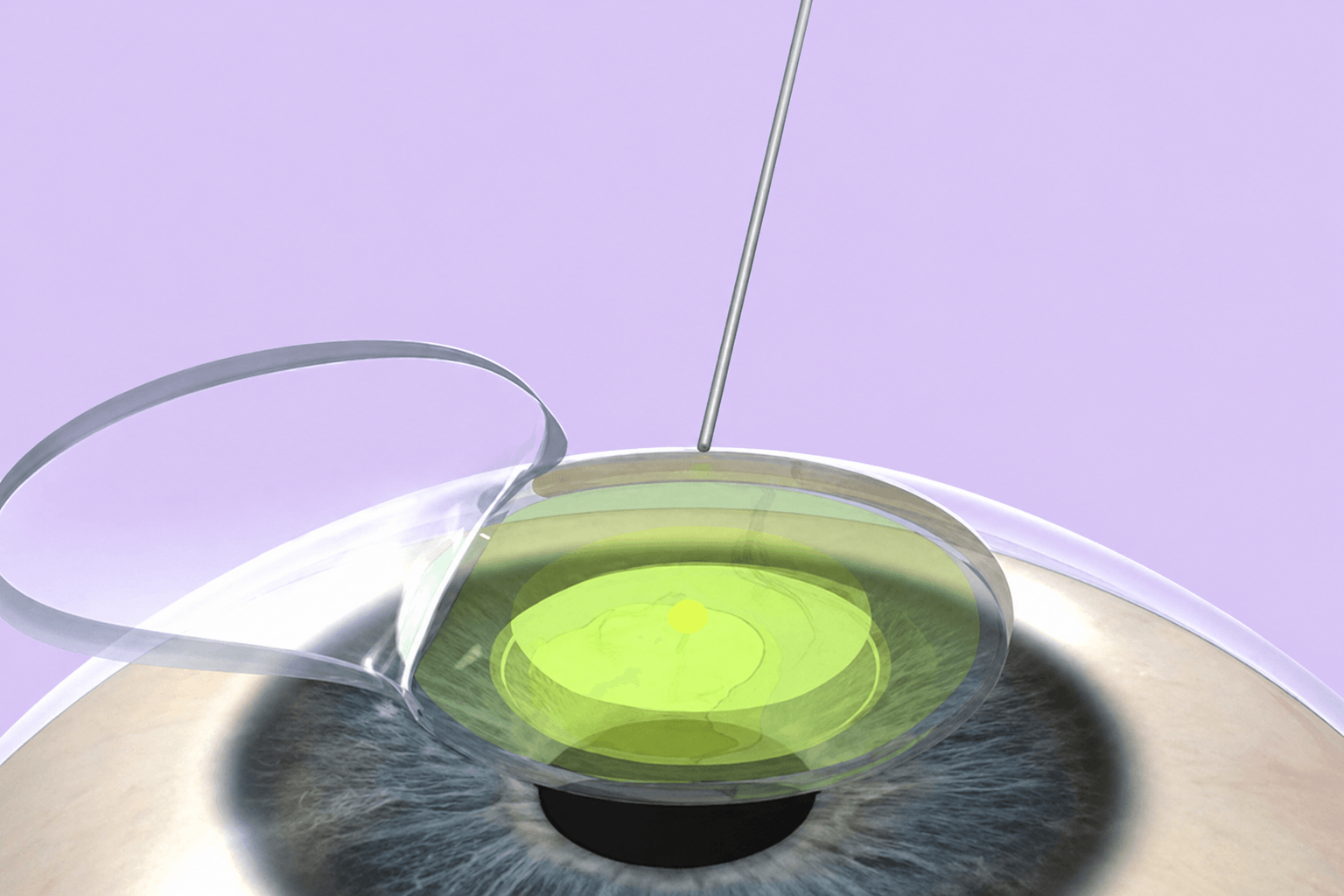
Riboflavin (vitamin B2) infusion
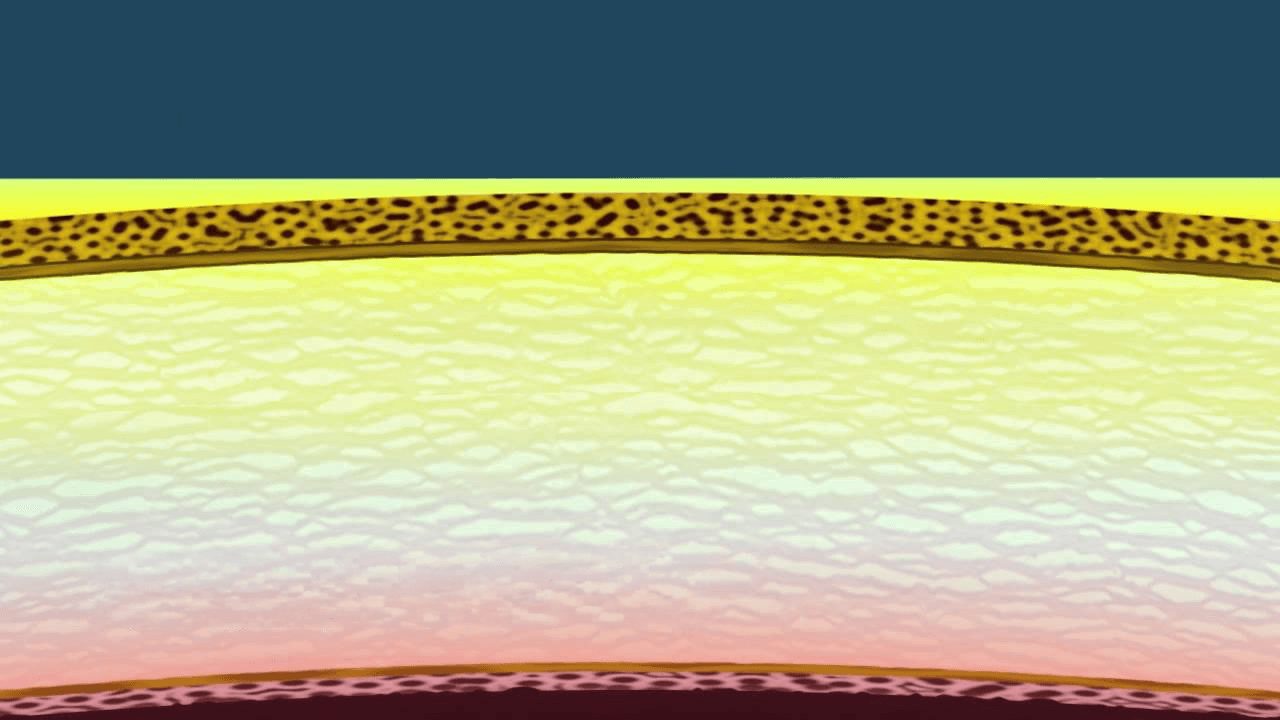
Riboflavin solution is applied to the stroma
so it permeates the collagen fibres STEP 2
UVA exposure
A specific UVA wavelength triggers
a photochemical reaction with the riboflavin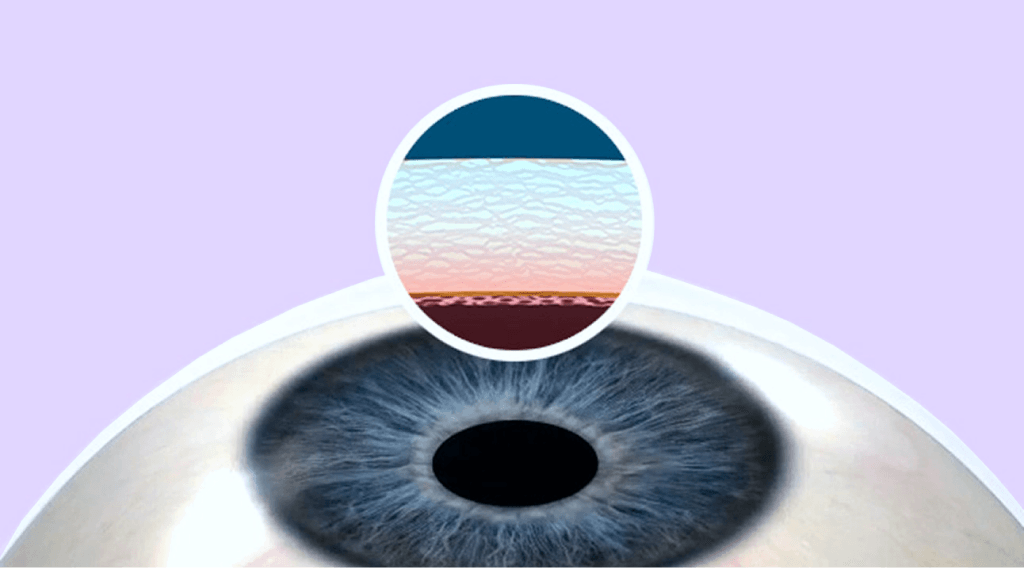 STEP 3
Stronger tissue bonds
Collagen fibres cross-link as a result,
raising the cornea's physical strength
Who CXL is for
To prevent post-op ectasia risk before refractive surgery
Patients needing extra biomechanical support due to deeper ablation
Those who want to minimise myopic regression and keep clear vision longer
Patients whose thinner cornea requires reinforced post-op stability
Keratoconus
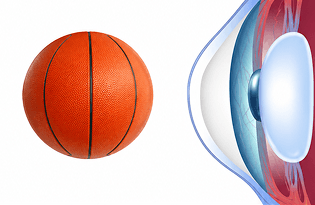
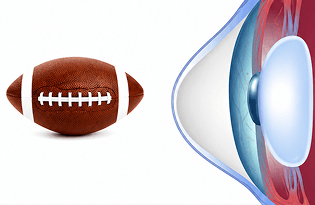
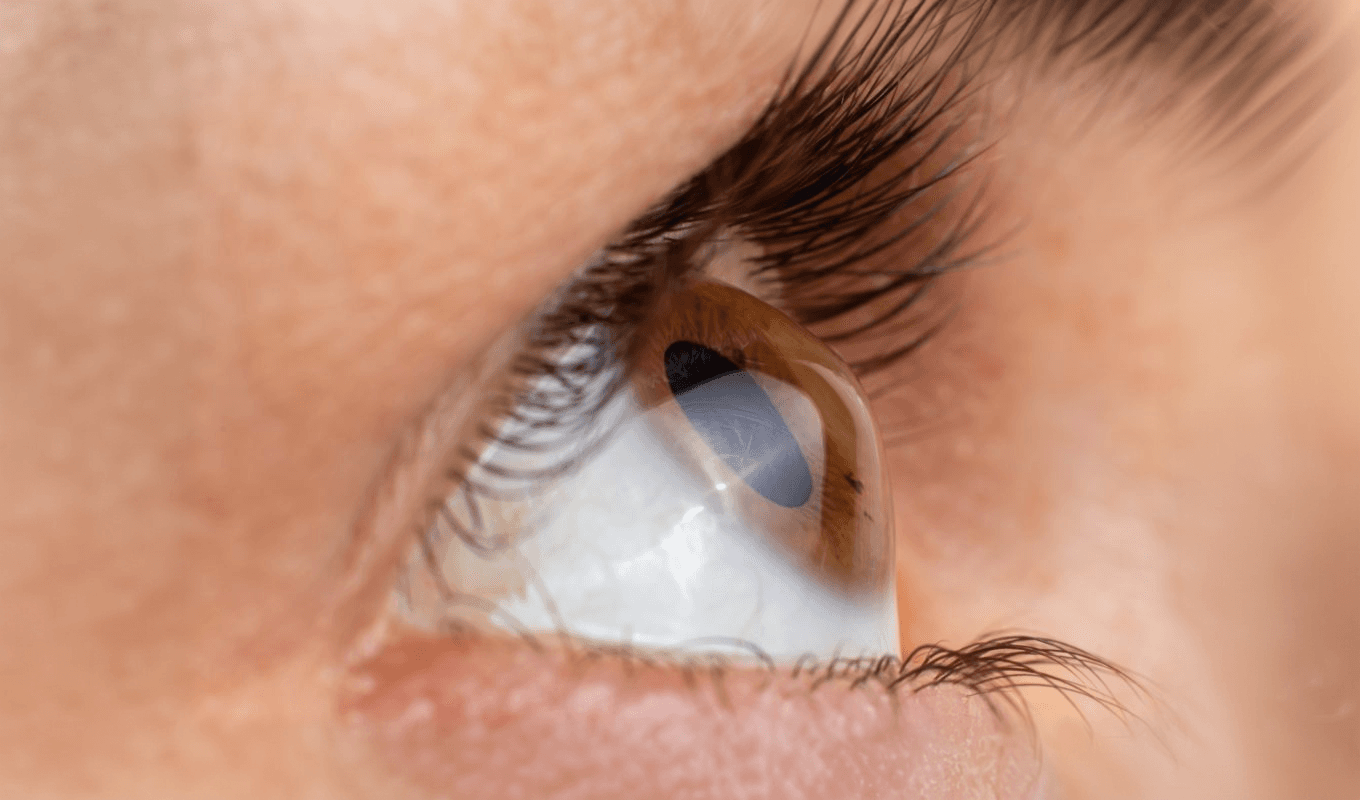
A progressive disease in which the central cornea thins,
bulges into a cone shape under intraocular pressure
Early signs are astigmatism and reduced vision;
progression causes irregular astigmatism and haze
Untreated, it risks corneal rupture and may ultimately
require a corneal transplant
Keratoconus treatment & surgery
Collagen cross-linking (CXL)
Firmly stabilises the cornea to suppress
further bulging and disease progression —
the standard treatment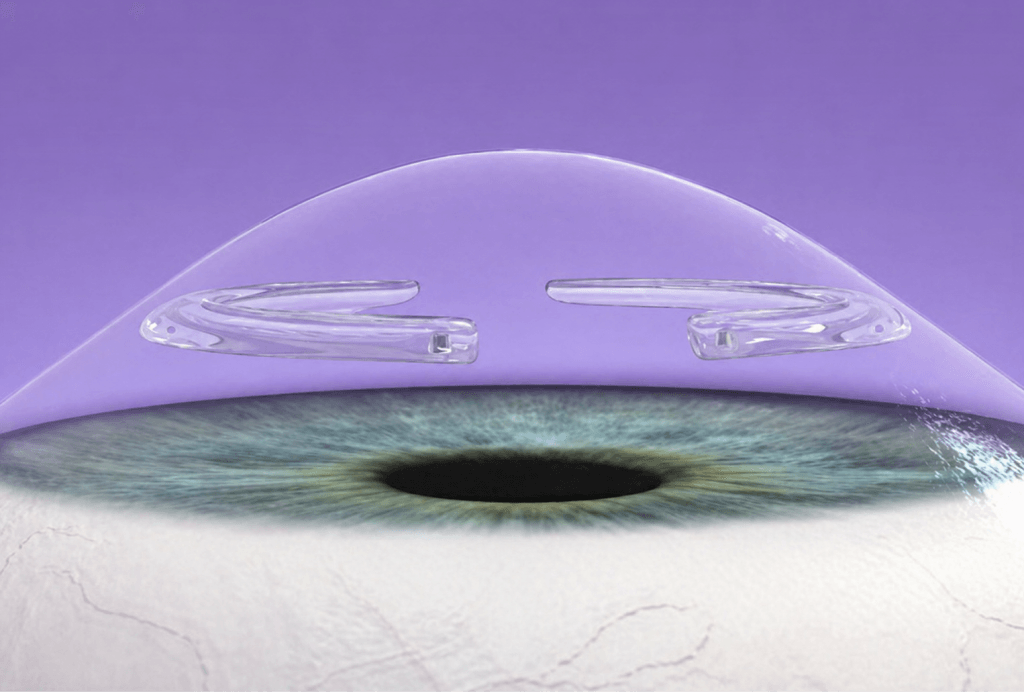
Intracorneal ring segments
Thin rings are inserted to correct abnormal curvature
and flatten the corneal shape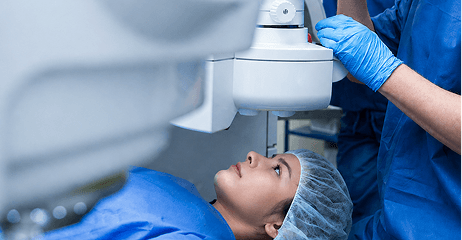
Combined treatment
Depending on stage, we combine refractive surgery or post-op hard contact lenses to restore vision
Who keratoconus surgery is for
Patients needing urgent stabilisation as the cornea thins and bulges
Asymmetry on corneal topography or suspected keratoconus
Genetic predisposition that warrants pre-emptive care and progression control
When glasses and lenses no longer correct vision due to corneal shape change