


Retina
Macular degeneration
One of the top three blinding diseases —
a major retinal condition easily mistaken for simple presbyopia.
The macula is the central retinal area densely packed with photoreceptors that distinguish colour and shape,
responsible for over 90% of vision.
Macular degeneration damages these photoreceptors as waste accumulates
or abnormal new blood vessels grow.
Missing the right treatment window reduces central vision
and, in severe cases, can lead to blindness.
Types of macular degeneration
Main AMD symptoms
More than vision loss — watch for the signs of macular degeneration.

Visual distortion
Centre of objects looks bent,
straight lines (grids, tiles) appear curved.
Central scotoma
A dark spot appears in the centre,
or part of the view looks empty.
Reduced contrast
Colours and outlines look hazy,
making light and dark hard to tell apart.
Sudden vision loss
Central vision drops so sharply that
detailed tasks like reading or driving become hard.
Causes of macular degeneration
Macular degeneration most commonly arises with aging, and various other factors can also contribute.

Aging

Genetics (e.g. macular dystrophy)

High myopia (myopic AMD)

Inflammation & trauma

Smoking & lifestyle

Underlying conditions
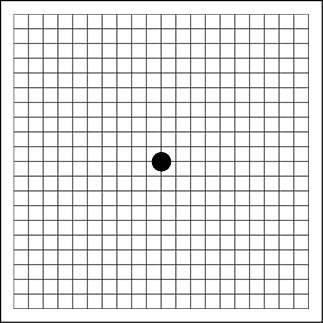
Self-screening with the Amsler grid
- STEP 1Prepare
Wear your usual glasses or lenses and view the grid in a bright room.
- STEP 2Gaze at the centre
From about 30 cm, cover one eye and gaze at the round dot in the centre of the grid.
- STEP 3Check your vision
Keeping your eyes fixed on the centre dot, check whether the surrounding lines look straight.
- STEP 4Test the other eye
Repeat the same test with the other eye to check for any visual field abnormality.
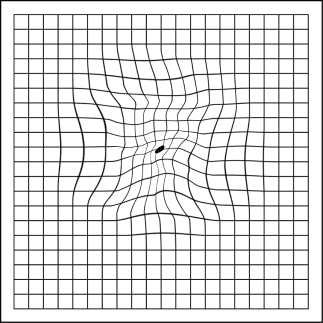
- The central dot looks blurry or hard to see
- Lines look bent or broken
- You cannot see all four corners of the grid
- The squares do not look uniform in size
If you notice any of the symptoms above, a detailed eye examination is needed
Macular degeneration treatment
Treatment is tailored to the type and stage of progression
Lifestyle management

Medication

Intravitreal injection

Laser treatment

Surgical treatment

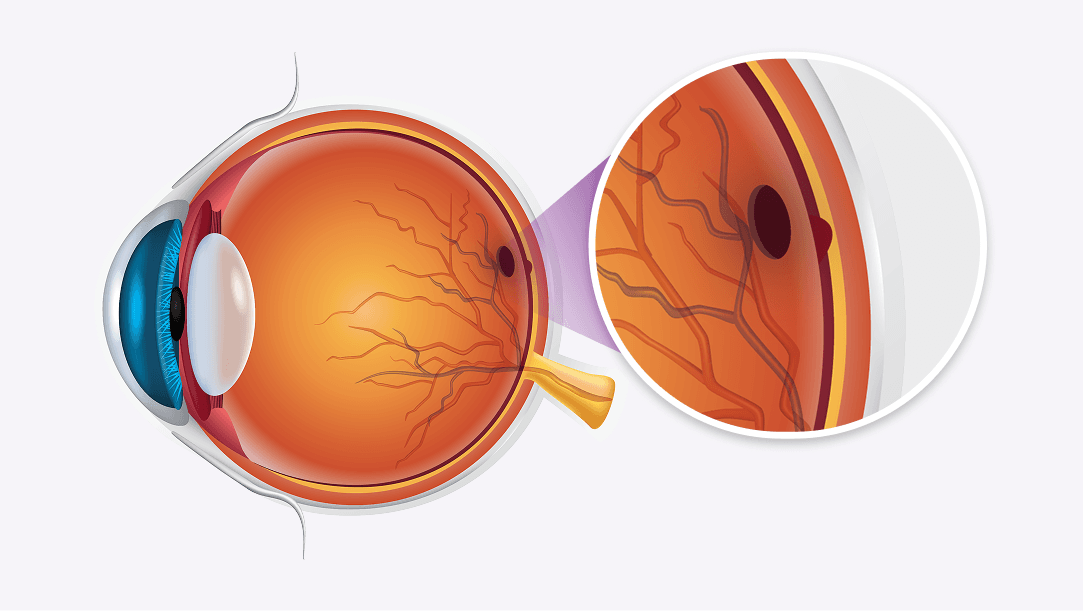
Macular hole
A hole at the centre of vision — fast action prevents blindness
A macular hole is a small hole that forms in the macula at the centre of the retina.
It mostly occurs in women in their 50s-60s,
and if left untreated, vision declines very rapidly.
- Idiopathic (age-related)
Occurs naturally as the vitreous pulls on the retina, with no specific cause.
- Traumatic
In younger people, caused by a strong impact to the eye.
- Other
Triggered by conditions such as high myopia or epiretinal membrane.