


Retina
Hypertensive retinopathy
‘The silent killer’ — high blood pressure is threatening the retinal vessels in your eyes
Hypertensive retinopathy occurs as sustained high blood pressure narrows or
damages the retina’s tiny vessels, with bleeding or exudates causing visual impairment.
The retina is the only place in the body where vessels can be observed directly,
making it a gauge of whole-body vascular health and an early warning of
stroke and cardiovascular risk.

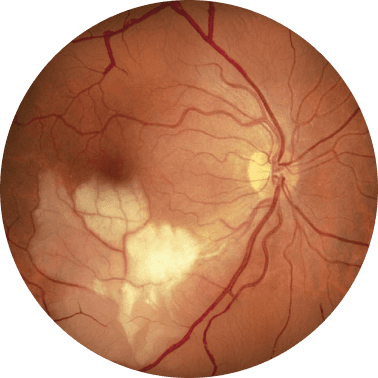
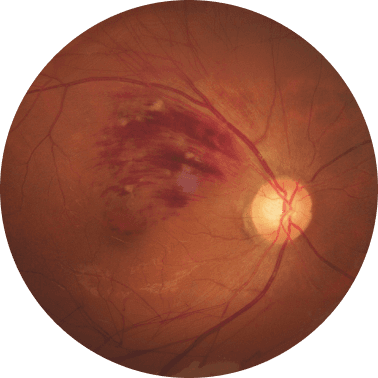
Retinal vascular occlusion
A silent strike that steals sight — a stroke inside the eye
Risk is higher with hypertension, diabetes, hyperlipidaemia or heart disease, so caution is needed.
Epiretinal membrane
An opaque fibrous membrane on the macula that distorts vision
An abnormal membrane forms on the macula —
bending vision or making it cloudy.
Timely surgery, before the membrane compresses
the macula, is the key to preserving vision.

- Idiopathic (90%)
Occurs with ageing, without other eye disease (about 10% in both eyes).
- Secondary (iatrogenic)
Develops after prior eye disease, inflammation, trauma, eye surgery or retinal treatment.
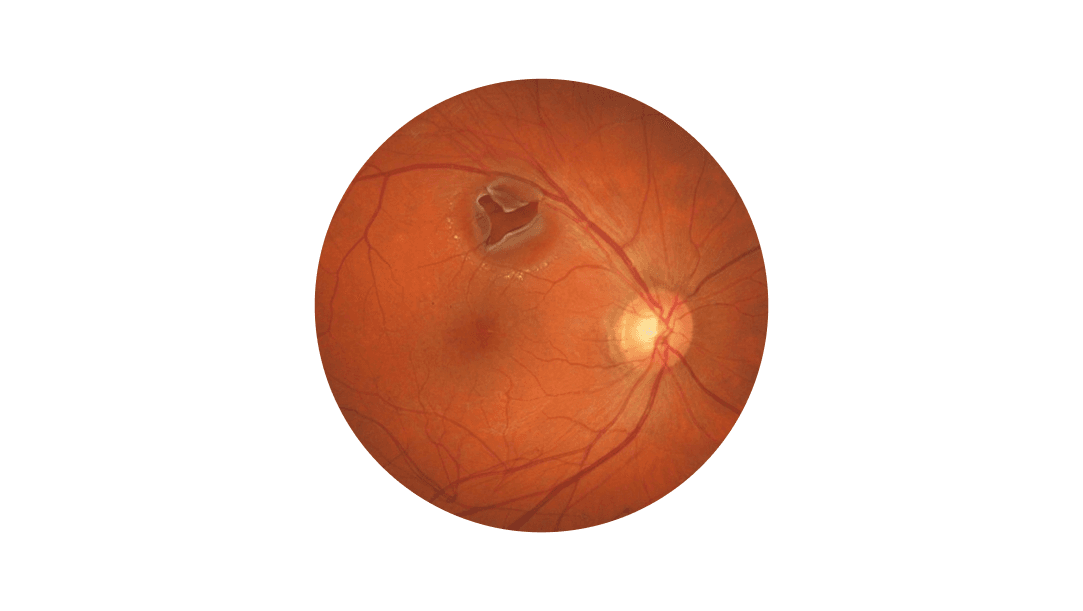
Retinal tear
A retinal tear is a small break or hole in the retina — the neural tissue inside
the eye to which the vitreous, the clear gel filling the eyeball, is attached.
Left untreated it can progress to retinal detachment, so early detection matters.
- Primary, with no specific cause
- Caused by vitreous traction, trauma or family history
- In high myopia, thinning of the peripheral retina can develop holes