


Shinsegae ICL
Designed around the eye's astigmatism axis
Vision correction with V Toric ICL
High myopia and astigmatism corrected together
with one specialised lens — V Toric ICL
A cornea-preserving approach
tailored to each eye for precise correction
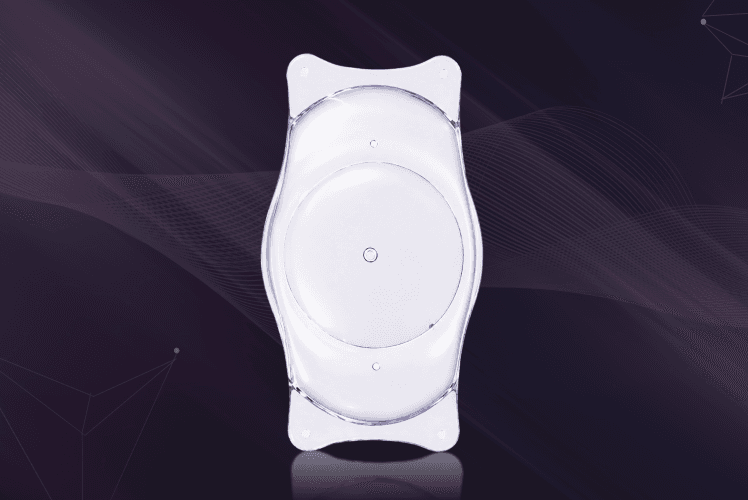
Standard Toric ICL vs V Toric ICL
Even with the same astigmatism implant, the direction the lens is inserted can change stability and visual quality
Limitations of conventional toric ICL

Hard to fix the
lens in the eye
Axis may shift from
lens rotation
Reduced correction
effect
Possible side effects when the lens is too large

Risk of elevated eye pressure
If there isn't enough space between the lens and eye, eye pressure can be affected

Risk of corneal endothelial cell loss
If the gap between cornea and lens is insufficient, corneal endothelial cells can be affected

Eye pain and headache
Pressure changes or the lens-adaptation process may cause discomfort
Why V (Vertical) Toric?
Asian eyes are often taller than they are wide
V Toric ICL inserts the lens vertically to suit this eye structure
A more stable position for the eye's structure
Reduced lens-rotation risk
Improved astigmatism-correction stability
Less eye burden and fewer side effects
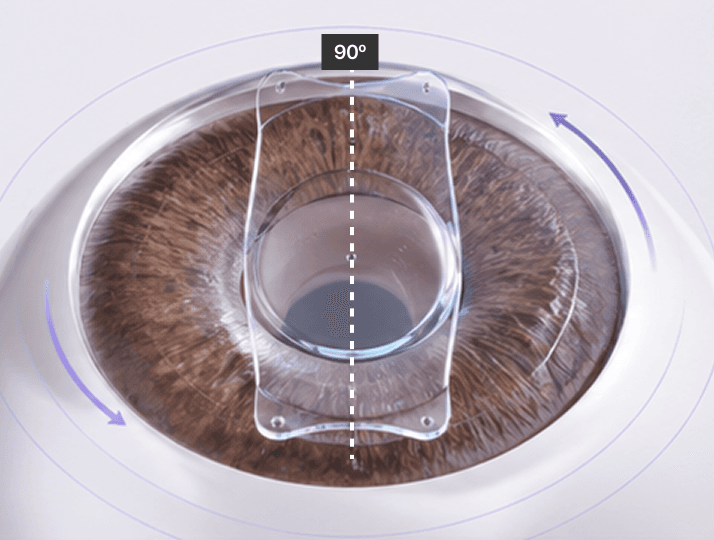
Why rotation matters for toric lenses
Standard lens
Toric lens
The difference 1° makes
so lens fixation and stability are crucial in toric ICL surgery
V Toric ICL is a customised toric lens implant
that precisely reflects four key factors
A customised V Toric ICL solution that comprehensively considers four factors — lens size, astigmatism power, astigmatism axis, and insertion direction

Lens size
Precisely analyses your eye structure
to choose the right lens size for your eye

Astigmatism power
Measures each person's astigmatism through precise testing
for customised astigmatism correction

Astigmatism axis
Accurately analyses the astigmatism axis
for stable vision-correction results

Insertion direction
Inserts the lens vertically
to help keep the lens stable and the axis aligned


Core diagnostic device for V Toric ICL
Anterior segment OCT CASIA2
Built on CASIA 2's precise data,
we enhance the accuracy of V Toric ICL surgical planning
3D analysis of the entire anterior segment,
from cornea to crystalline lensQuantifies the depth and shape of the space
where the lens will be implantedAnalyses individual differences in anterior
chamber angle structure with dataDetermines the lens size and orientation suited to V Toric ICL